
Russell County Arrest Records and Charges
Russell County arrest records begin with law enforcement. They can reflect an arrest, booking date, physical descriptors, and an inmate identifier when the person enters local custody. The official sheriff in-custody feed is a current custody source, but its full interface did not expose a complete form during research. Search snippets from the official feed showed booking date, gender, race, age, height, weight, eye color, hair color, and inmate ID. The Russell County inmate records channel covers the jail roster and booking side in more detail.
Court charges after arrest begin with a legal filing. A complaint, warrant after service, citation, information, or indictment can state the alleged offense. The Russell County District Attorney for the 26th Judicial Circuit then prosecutes filed criminal charges. Pleas, motions, disposition, and sentence build the complete Russell County criminal court record. That later file is the right source for an outcome. An in-custody listing only shows custody status; it does not establish what charge was proved.
Find Russell Arrest Records and Charges
Start with the source that created the record. For current custody and booking facts, use the Russell County Sheriff's in-custody feed or call the jail at 334-298-8621. For charges filed in Circuit or District Court, use the free County 57 docket by date, paid Just One Look for fuller trial court information, or the free lobby terminal at the Judicial Annex. The Circuit Clerk also accepts research and copy requests but warns that reduced staffing can delay a response.
- Check the sheriff source for booking or present custody, then note the inmate ID and booking date if shown.
- Identify whether the charge belongs to Circuit, District, or Phenix City Municipal Court.
- Search the court record by case number when possible, or use setting date and last name on the free docket.
- Read each charge, code, level, status, plea, and disposition as a separate line in the case.
- Ask the clerk for an available copy when the charging document itself is needed.
Phenix City Municipal Court handles city cases and city-limit charge functions described by Russell County's warrant guidance. A city police ticket or camera ticket also belongs there. For a state case, the Circuit Clerk is at 501 14th Street, Phenix City. The Sheriff's Office is at 305 Prentiss Drive. That office split prevents an arrest record request from automatically reaching the court charge file.
Russell County Charging Documents
A charging document states the accusation that enters the case. Russell County research specifically identifies complaints, warrants, citations, and indictments among criminal records. An indictment is a grand jury felony charge. A complaint states allegations at the start of a matter. An information is a prosecutor-filed charging instrument where applicable. The exact document depends on how the case began and on Alabama procedure, so the filed instrument should be read rather than inferred from the arrest alone.
| Complaint | Information | Indictment | |
|---|---|---|---|
| Source | Sworn allegations used to begin a matter | Prosecutor-filed accusation where procedure permits | Grand jury charge |
| What to verify | Named offense and factual claim | Counts and cited offense | Each count returned by the grand jury |
| Later record | Plea, amendments, disposition, and sentence must be checked in the case file. | ||
Russell County warrant procedure adds a local path. A complainant first files an incident or offense report. For a felony outside municipal limits, an investigator accompanies the complainant to the magistrate. The complainant is placed under oath and completes a deposition of the alleged crime, unless the officer already prepared it. The magistrate independently decides whether probable cause exists. A warrant issued from that process is not public until served.
Russell County Charge Status
Court charge records change during prosecution. Pending means no final outcome appears yet. An amendment changes the filed charge or its terms. A reduction replaces or resolves the count at a lower level when the record shows that result. Dismissed means the court case ended on that count without a conviction. Nolle prosequi is a prosecutor's decision not to continue that charge at that time. Because one arrest can yield several counts, statuses must be matched to individual charges.
| Status | What It Means |
|---|---|
| Pending | The charge has no recorded final outcome yet. |
| Amended / reduced | The filed allegation changed or was resolved in a different form. |
| Dismissed | The count ended without a conviction on that charge. |
| Nolle prosequi | The prosecution recorded that it would not proceed on the count at that time. |
| Convicted / guilty | An accepted plea or verdict established guilt on that count. |
Russell Charges Versus Convictions
Being arrested or charged does not mean a person was convicted. The arrest record shows law-enforcement action. The charging document states an accusation. Only the later disposition shows whether a count ended in conviction, acquittal, dismissal, or another recorded result. A name match must also be checked against a case number and court because similar names can refer to different people.
| Charge | Conviction | |
|---|---|---|
| Stage | Accusation | Verdict or plea |
| Meaning | Accusation filed with the court | Guilt established by accepted plea or verdict |
| Can change? | May be amended, reduced, or dismissed | Shown in the disposition and judgment, subject to later court process |
| Best record | Charging instrument and early docket | Disposition and sentencing entries |
Russell Records Sealed or Expunged
Sealed and expunged records both leave routine public search, but the paths differ. A sealed record is hidden under a law or court order. Expungement uses Alabama's statutory process for eligible criminal records. In Russell County, the petition is filed in the criminal division where the charge was filed. The official petition calls for a certified local law-enforcement or court record tied to the charge and a certified ALEA criminal record.
- Sealed
- Hidden from ordinary public access by controlling law or a court order.
- Expunged
- Removed from routine public access through the Alabama statutory process and resulting order.
- Redacted
- A public record remains available, but protected details are removed from the copy.
Russell County Charge Levels
The court and statute attached to a charge help explain its level. Circuit Court handles felony prosecutions and related misdemeanor or ordinance violations from the same incident. District Court handles misdemeanors outside stated exceptions, may receive certain felony guilty pleas, and holds preliminary felony hearings. Municipal Court handles city matters. A preliminary hearing entry does not turn the District Court record into the final felony trial file. Follow the case into Circuit Court when jurisdiction shifts.
One arrest can produce more than one count, and each count may cite a different offense. Read the charge text and code with the current status. Do not assume the most serious arrest allegation is the conviction. The later plea, disposition, and sentence control that conclusion.
Custody and Statewide Record Channels
Different official systems answer different questions. The VINELink custody notification service may provide custody status alerts where Alabama or local records participate. Its official state-selection screen is shown below.
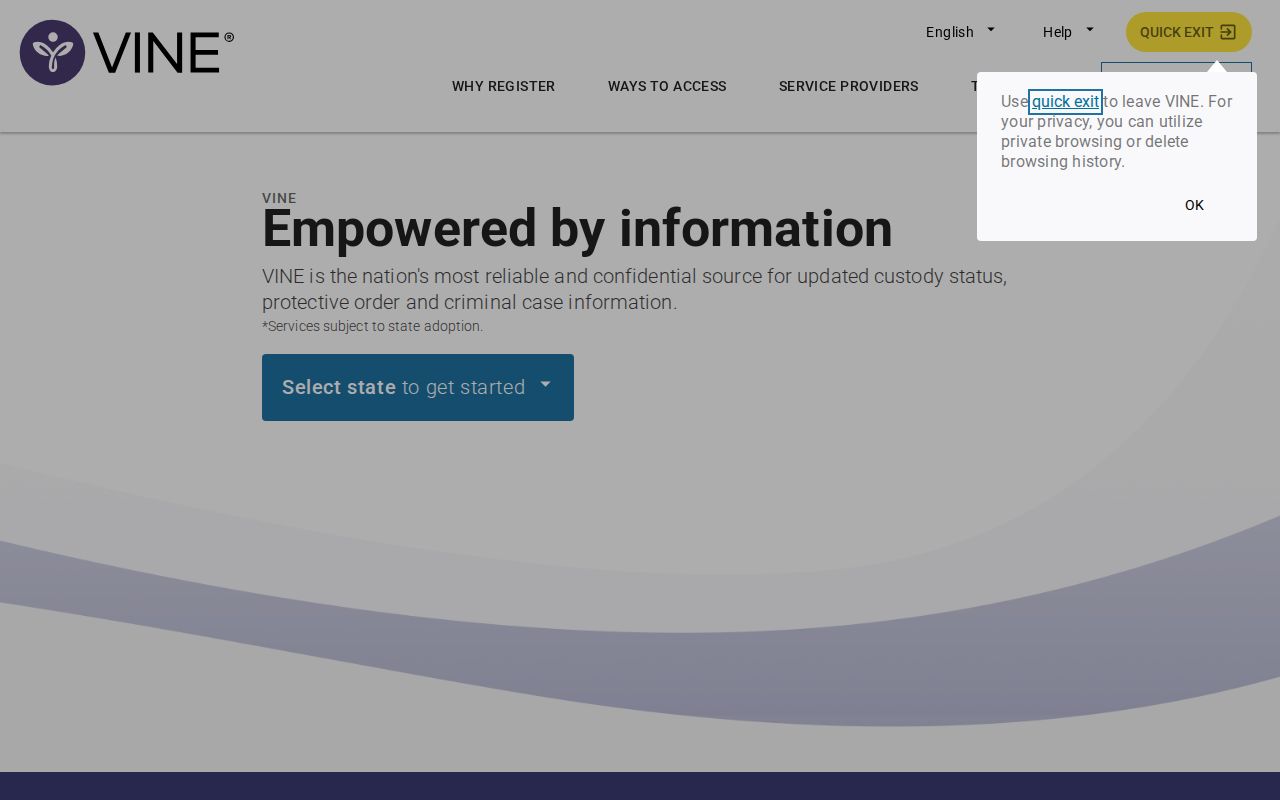
VINELink is a custody and notification channel, not the Russell County court's charge or disposition file.
The Alabama Department of Corrections search covers people currently incarcerated in state prison, not current Russell County pretrial detainees. Federal sentenced prisoners use the Federal Bureau of Prisons inmate locator, pictured below.
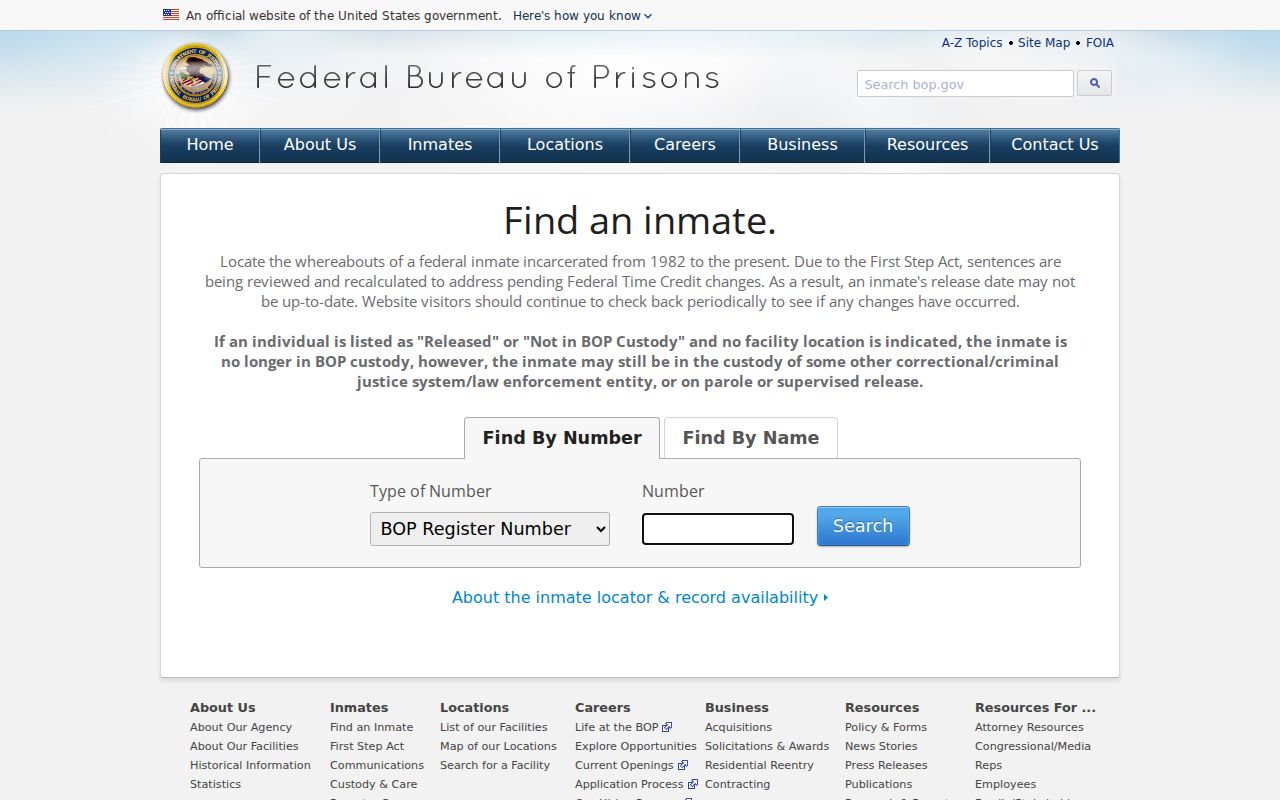
The federal locator is separate from both the sheriff booking source and the Alabama trial court case file.
ALEA's official sex offender registry is a specialized public-safety database, not a general arrest or charge search. No official statewide public warrant database was found in the Russell County research. For criminal-history use beyond one case, follow the current ALEA process rather than combine unrelated web results.
Public Russell County Charge Records
Alabama Code Section 36-12-40 gives Alabama citizens a right to inspect and copy public records unless another law makes the material nonpublic. Sections 36-12-43 through 36-12-46 provide a request framework that permits reasonable fees and protects private, confidential, privileged, and nonpublic information. For Russell County charge records, that framework works with court rules, criminal-record statutes, juvenile confidentiality, and sealing or expungement orders. A public case can still contain redactions.
The local access chain includes the free date-based docket, paid Just One Look trial court access, the free Judicial Annex lobby computer, and Circuit Clerk research or copy requests. The lobby computer provides available case information and document images during regular business hours. Clerk-performed work can take longer because the office reports significant staffing limits. For fast verification, use the case number, defendant name, court division, and an approximate filing or setting date.
Restricted Russell County Charge Records
Juvenile legal files and social records are confidential under Alabama Code Section 12-15-133 except where the law permits release. Sealed and expunged charges will not appear through ordinary public access. Social Security numbers, financial accounts, minor names, medical facts, and protected addresses can be removed from otherwise public files. Open investigations and nonpublic law-enforcement material are not made public simply because an arrest occurred.
Warrant status has an additional Russell County rule. The official magistrate page says an arrest warrant is not public until served. A person who suspects an active warrant should not depend on an unofficial database. The local instruction is to appear in person at the Russell County Sheriff's Department. Once served and filed, related facts may appear in booking data or a criminal case record, subject to all other access limits.
Important: Arrest and charge data cannot substitute for a lawful, purpose-specific consumer report in an FCRA-regulated decision.